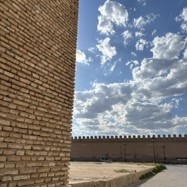
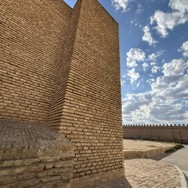
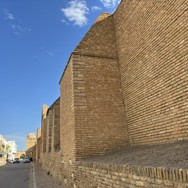
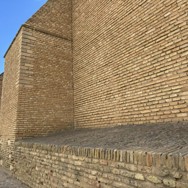
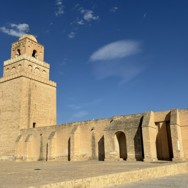
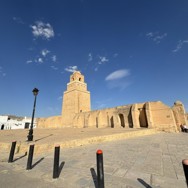
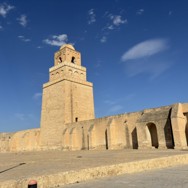
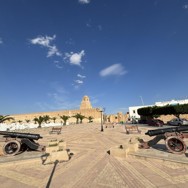
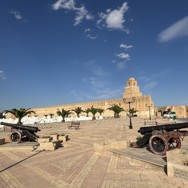
Mosque of Uqba ibn Nafi (Great Mosque of Kairouan)
This content and any associated links were generated with the assistance of artificial intelligence
and may still require editorial adjustments.
You are solely responsible for verifying the accuracy of the information,
reviewing external sources, and planning your visit accordingly.
Welcome to Mosque of Uqba ibn Nafi (Great Mosque of Kairouan), Kairouan
This historic mosque, founded by Uqba ibn Nafi in 670 and largely rebuilt in the 9th century under the Aghlabids, remains one of the most significant monuments in Islamic and North African history, and a UNESCO World Heritage landmark in Tunisia.
Historical Context
The original mosque was built in 670 by Uqba ibn Nafi but was reconstructed multiple times, most notably in 836 by Emir Ziyadat Allah I during the Aghlabid period, shaping its present form with its famous hypostyle hall, courtyard, and oldest surviving minaret in the western Islamic world. Its architectural features—such as the marble columns, ornate mihrab, and wooden minbar—have been extensively studied in art history and archaeology. The site also influenced mosque architecture across the Maghreb and Andalusia. Scholarly sources document its evolution and architectural significance in depth.
Landmarks
- Great Mosque of Kairouan: This fortress-like mosque features 9th-century Aghlabid architecture, with its massive minaret, marble-columned hypostyle hall, ornate mihrab with luster tiles and marble panels, and the oldest wooden minbar. Its architectural plan became a model for Maghreb mosques.
- Aghlabid Basins: Ancient water reservoirs built by the Aghlabids, open daily from 8:00 AM to 6:00 PM, with free general access and small exhibition fees (~$2) for special viewing areas.
- Kairouan Medina: The oldest part of the city, with winding souks, traditional crafts, and historic gates; strolling is free and features the authentic cultural fabric of the town.
- Mosque of the Three Doors: A 9th-century mosque known for its finely carved façade; exterior viewing is possible, as interior access may be limited.
- Mausoleums (e.g., Sidi Amor Abbada): Historic religious sites in Kairouan included in multi-site tourist tickets, with varying opening times (e.g., closes at 1:00 PM on Fridays).
Museums
-
Rakkada Museum (Museum of Islamic Arts)
This museum showcases Islamic art, manuscripts, and Kairouani calligraphy, including parts of the 'Nurse’s Qur’an', and artifacts from the Great Mosque’s history.
Visit Website
Opening Hours: Included in the multi-site ticket; typical visiting hours align with general site access (approx. morning to afternoon).
Ticket Price: Multi-site pass costs about 12 TND (~$4 USD), covering the mosque, the museum, and other monuments.
-
Other Museums in Kairouan
Various small museums and mausoleums are included in the city’s multi-site pass (e.g., Mosque of the Three Doors, Mausoleum of Sidi Abada), offering a comprehensive visit under one ticket.
Visit Website
Opening Hours: Same as above—typically open during daytime hours.
Ticket Price: The multi-site pass (~12 TND) covers entrance.
Tips for Visitors
- Arrive early—many sites, including the Great Mosque, are open from around 8:00 AM to early afternoon (2:00 PM typically).
- Non-Muslims may explore the mosque courtyard and exterior but cannot enter the prayer hall.
- Purchase the Kairouan multi-site ticket (~12 TND) for access to multiple attractions at a budget-friendly rate.
- Bring water and wear comfortable shoes—visiting the medina and various sites involves walking.
Sources
- Architectural and historical details of the Great Mosque: Smarthistory; Aghlabid architecture studies
- Opening hours and ticket price of the Great Mosque: Rehlat; Ticket‑To‑Utopia
- Multi‑site ticket and Rakkada Museum information: The Nomad Almanac
- Aghlabid Basins hours and fees: Rehlat
- Historical and scholarly context: Brill book chapter; Dialoghi Mediterranei research